Yksittäisistä AI-kokeiluista koko organisaation laajuiseen tekoälymuutokseen
WikiAgilen kanssa kumppanoitunut suomalainen liiketoimintayksikkö muutti hajanaisen tekoälykokeilunsa koko organisaation laajuisiksi päästä päähän -prosessimuutoksiksi hyödyntämällä Yhteisäly- ja arvovirtatyöpajoja.
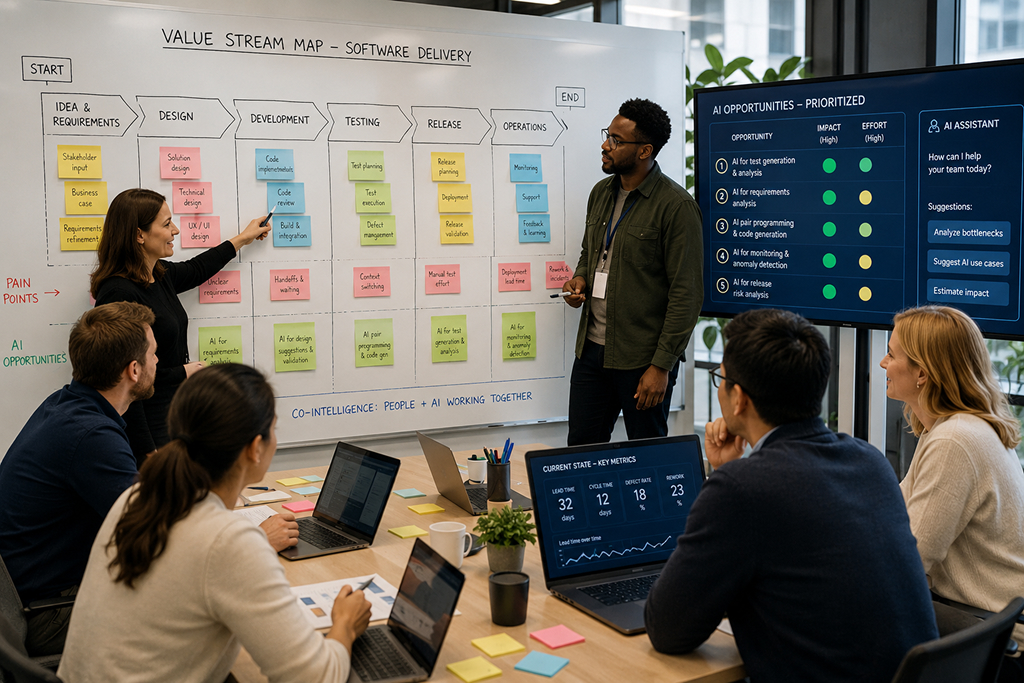
Erään ison kansainvälisen yrityksen suomalainen liiketoimintayksikkö kumppanoitui WikiAgilen kanssa muuttaakseen hajanaisen tekoälykokeilun koko organisaation laajuisiksi prosessimuutoksiksi sisällyttämällä tekoälyn päästä päähän -työnkulkuihin Yhteisäly-työpajojen ja arvovirtatyöpajojen avulla.
Yhteisäly, Co-intelligence, on Ethan Mollicin termi, joka kuvaa sitä, miten tekoäly ja ihmiset yhdessä saavat aikaan parhaat tulokset.
Case: AI-transformaatio
Monet yritykset ovat aloittaneet tekoälymatkansa samalla tavalla: yksilöt kokeilevat irrallisia AI-työkaluja, jotka parantavat henkilökohtaista tuottavuutta, mutta itse prosessit pysyvät pitkälti ennallaan.
Monikansallisen teknologiayrityksen suomalainen liiketoimintayksikkö tunnisti tämän kuvion jo varhain. Vaikka AI-työkalut auttoivat yksilöitä työskentelemään nopeammin, organisaatio näki, ettei hajanainen tekoälyn käyttöönotto riittänyt monimutkaisten päästä päähän -työnkulkujen parantamiseen.
Monissa organisaatioissa yksittäiset tehtävät nopeutuvat, mutta kokonaisprosessin virtaus tuskin muuttuu. Yksi vaihe voi parantua 30 %, mutta kokonaisläpimenoaika pysyy lähes samana.
Päästäkseen irrallisten kokeilujen yli organisaatio kumppanoitui WikiAgilen kanssa ja hyödynsi sen Yhteisäly-työpajaa sekä konsultointia käynnistääkseen laajemman, ihmiskeskeisen AI-transformaation. Sen sijaan että keskityttiin vain työkaluihin, aloitteessa keskityttiin tekoälyn integroimiseen todellisiin työnkulkuihin, arvovirtoihin ja tiimien väliseen päivittäiseen yhteistyöhön.
Yksittäisistä kokeiluista kehittyi nopeasti koko organisaation laajuinen vauhti työnkulkujen uudistamiselle. Samat ketterät ja lean-periaatteet, jotka olivat aiemmin tukeneet liiketoiminnan ketteryyttä, mahdollistivat nyt tekoälyn käyttöönoton laajemmassa mittakaavassa.
Arvovirtatyöpajojen (Value Stream Mapping, VSM) ja Yhteisäly-työpajojen avulla organisaatio tunnisti prosessien pullonkaulat, priorisoi tekoälymahdollisuudet liiketoimintavaikutuksen ja toteutustyömäärän perusteella sekä loi jaetun backlogin työnkulkujen parannuksille ja uudelleenkäytettäville AI-rakennuspalikoille. Varhaiset tulokset osoittavat, että tekoälyn integroiminen päästä päähän -työnkulkuihin parantaa prosessin virtausta huomattavasti tehokkaammin kuin yksittäiset, irralliset AI-kokeilut.
Yksittäisistä AI-työkaluista koko organisaation laajuiseen transformaatioon
Monikansallisen teknologiayrityksen Suomen toimipisteessä sadat ammattilaiset kehittävät ja valmistavat edistyneitä teknologiatuotteita. Organisaatiolla on vahva lean-kulttuuri ja pitkään vakiintuneet Kaizen-käytännöt, jotka antoivat luontevan perustan systemaattiselle tekoälyn käyttöönotolle.
Aluksi tiimit kokeilivat työkaluja, kuten Microsoft Copilot Chatia ja GitHub Copilotia. Vaikka nämä työkalut paransivat yksilöllistä tuottavuutta, ne eivät perustavanlaatuisesti parantaneet laajempaa kehitys- ja toimitusprosessia.
Kuten organisaation Senior Software Engineering Manager kuvaili, irralliset AI-työkalut paransivat yksittäisiä prosessivaiheita, mutta päästä päähän -virtaus muuttui hyvin vähän monimutkaisissa työnkuluissa.
Organisaatio ymmärsi, että todellinen mahdollisuus ei ollut yksinkertaisesti useampien AI-työkalujen käyttöönotto, vaan työnkulkujen uudelleensuunnittelu siten, että tekoälyllä tehdyistä agenteista voisi tulla osa päästä päähän -prosessia.
Keskeinen muutos oli siirtyminen yksilöllisestä AI-käytöstä tiimitason yhteisälyyn (co-intelligence). Sen sijaan, että tekoälyä olisi käsitelty erillisenä teknologia-aloitteena, organisaatio halusi sisällyttää sen suoraan jokapäiväiseen työhön ja jatkuvan parantamisen käytäntöihin tiimien välillä.
Yhteisäly-työpajojen hyödyntäminen tehokkuutta tuottavien prosessiparannusten tunnistamiseen
Yhdessä WikiAgilen kanssa organisaatio järjesti rakenteellisen sarjan Yhteisäly-työpajoja, jotka oli suunniteltu tunnistamaan, missä tekoäly voisi luoda eniten arvoa todellisissa operatiivisissa työnkuluissa.
Työpajoissa yhdistettiin:
- Value Stream Mapping
- prosessin parantamisen menetelmät
- AI-mahdollisuuksien arviointi
- yhteistoiminnallinen priorisointi
Tavoitteena ei ollut vain tunnistaa tehtäviä, joissa tekoälyä voitaisiin käyttää. Sen sijaan tiimit keskittyivät ymmärtämään, miten työ todellisuudessa virtasi organisaation läpi, missä pullonkaulat ja viiveet syntyivät ja missä tekoäly voisi parantaa kokonaisprosessia.
Todellisen työnkulun kartoittaminen
Tiimit määrittelivät ensin valittujen prosessien alku- ja päätepisteet sekä dokumentoivat keskeiset tehtävät, riippuvuudet ja työkalut, joita tarvittiin tulosten tuottamiseen. Tämä loi yhteisen ymmärryksen siitä, miten työ todellisuudessa eteni arvovirrassa, eikä siitä, miten prosessin oletettiin toimivan.
Kipupisteistä priorisoituihin AI-parannuksiin
Sen sijaan, että olisi aloitettu AI-teknologiasta, työpajoissa keskityttiin operatiivisiin pullonkauloihin, toistuvaan manuaaliseen työhön, viiveisiin ja laaturiskeihin todellisissa työnkuluissa.
Tiimit tunnistivat yhdessä kriittisimmät kipupisteet ja arvioivat AI-käyttötapauksia toteutustyömäärän ja odotetun liiketoimintavaikutuksen perusteella. Lähestymistapa korosti usein toistuvien, arvokkaiden työnkulkuongelmien ratkaisemista ensin oppimisen ja käyttöönoton kiihdyttämiseksi.
Työn tuloksena syntyi jatkuvasti priorisoitu backlog jaetuista AI-rakennuspalikoista ja työnkulkujen parannuksista.
Ihmiskeskeisen tekoälyn käyttöönoton rakentaminen
Yksi WikiAgilen Co-intelligence-lähestymistavan keskeisistä vahvuuksista oli sen varmistaminen, että tekoälyn käyttöönotto oli alusta asti ihmiskeskeistä.
Organisaatio ja WikiAgile tunnistivat varhain, että onnistunut tekoälyn käyttöönotto ei ole vain teknologiamuutos, vaan myös inhimillinen muutos. Monissa organisaatioissa tekoälyn käyttöönotto luo FOBO-ilmiön – pelon tarpeettomaksi tulemisesta (fear of becoming obsolete) – kun ihmiset pohtivat, miten tekoäly muuttaa heidän rooliaan, osaamistaan ja tulevaa arvoaan työssä.
Sen sijaan, että näitä huolia olisi vältelty, niitä käsiteltiin työpajoissa avoimesti. Keskusteluissa keskityttiin EPOCH-ajatteluun – niihin ainutlaatuisesti inhimillisiin vahvuuksiin, jotka tulevat entistä tärkeämmiksi tekoälyaikana, kuten empatia (empathy), tarkoitus (purpose), omaperäisyys (originality), kriittinen ajattelu (critical thinking) ja inhimillinen harkinta (human judgment).
Keskeinen oivallus muutoksen aikana oli, että parhaat tulokset eivät synny pelkästään tekoälystä, vaan ihmisten ja AI-agenttien välisestä tehokkaasta yhteistyöstä. Vaikka tekoäly voi nopeuttaa analyysiä, automaatiota ja sisällöntuotantoa, inhimillinen harkinta on edelleen välttämätöntä kontekstin ymmärtämisessä, priorisoinnissa, etiikassa, päätöksenteossa ja innovoinnissa.
Tämä auttoi siirtämään keskustelua pelosta mahdollisuuteen. Tekoälyä ei enää nähty ihmisten korvaajana, vaan kumppanina, joka vahvistaa inhimillisiä kykyjä ja parantaa työn kokonaisvirtausta.
Ihmiskeskeinen lähestymistapa loi vahvan sitoutumisen koko organisaatiossa. Kun tiimit alkoivat kokea konkreettisia parannuksia omassa päivittäisessä työssään, innostus AI-pohjaiseen yhteistyöhön levisi nopeasti. Mikä alun perin alkoi kohdennettuna muutoshankkeena, kehittyi koko organisaation laajuiseksi liikkeeksi, jossa tiimit aktiivisesti tunnistivat uusia mahdollisuuksia integroida tekoäly työnkulkuihinsa ja parantaa jatkuvasti työn tekemisen tapaa.
Merkittävästi parantuneet työnkulut
Tekoälyn integrointi arvovirtoihin on jo tuottanut konkreettisia operatiivisia hyötyjä koko organisaatiossa.
Tällä hetkellä käynnissä on kuusi arvovirta-aloitetta muun muassa ohjelmistokehityksen, testiautomaation ja lokalisaation työnkulkujen parissa.
Organisaatio havaitsi, että yhteisäly- ja arvovirta-lähestymistavan kautta ohjatut aloitteet paransivat päästä päähän -virtausta huomattavasti tehokkaammin kuin yksilöiden itsenäisesti käyttämät irralliset AI-työkalut.
Lisähyötyjä olivat:
- selkeämpi parannusaloitteiden priorisointi
- parantunut prosessin läpinäkyvyys ja dokumentaatio
- tekoälyyn liittyvän työn päällekkäisyyden väheneminen
- vahvempi yhteistyö teknisten ja liiketoiminnan tiimien välillä
- korkeat tekoälyn käyttöönottoasteet tiimeissä
Organisaatio havaitsi myös, että vahva johdon tuki ja prosessiin osallistuville varattu aika kiihdyttivät käyttöönottoa merkittävästi.
Ehkä tärkeintä on, että muutos sai vahvan vetovoiman organisaatiosta itsestään. Eri toimintojen tiimit innostuivat osallistumaan, tuomaan ideoita ja edistämään AI-pohjaisia työnkulkuparannuksia. Tekoälyn käyttöönottoa ei enää nähty erillisenä, ylhäältä johdettuna aloitteena, vaan jaettuna mahdollisuutena parantaa työn tekemistä koko organisaatiossa.
Ketterä perusta nopeutti tekoälyn käyttöönottoa
Aloitteen menestys on herättänyt kiinnostusta yrityksen muissa osissa, ja yhteisäly- ja arvovirta-perusteiset mallit ovat muodostumassa laajemman AI-käyttöönoton ohjenuoraksi.
Organisaation olemassa olevalla ketterällä ja lean-kulttuurilla oli suuri merkitys menestyksessä. Tiimit olivat jo tottuneet:
- jatkuvaan parantamiseen
- monitieteiseen yhteistyöhön
- hajautettuun ongelmanratkaisuun
- iteratiiviseen kokeiluun
- prosessin läpinäkyvyyteen
Nämä kyvyt osoittautuivat erittäin arvokkaiksi myös tekoälyn käyttöönotossa.
Organisaation kokemus viittaa siihen, että onnistunut tekoälyn käyttöönotto ei ole ensisijaisesti työkaluhaaste. Se on organisaatiosuunnittelun haaste. Kestävä AI-transformaatio tapahtuu, kun organisaatiot siirtyvät yksilöllisestä AI-käytöstä ihmiskeskeiseen, prosessitason yhteisälyyn.
Keskeiset opit
Kestävä tekoälyn käyttöönotto vaatii fasilitointia, ei vain työkaluja
Organisaatio huomasi, että onnistunut tekoälyn käyttöönotto vaati enemmän kuin pelkän pääsyn AI-työkaluihin. Rakenteellinen fasilitointi ja jatkuva valmennus olivat kriittisiä tiimien auttamiseksi tunnistamaan merkityksellisiä työnkulkuparannuksia, priorisoimaan aloitteita ja ylläpitämään vauhtia organisaatiossa.
WikiAgilen Co-intelligence-lähestymistapa auttoi muuttamaan hajanaisen kokeilun koordinoiduksi, koko organisaation kattavaksi prosessitason tekoälyn käyttöönotoksi. Yhteistoiminnallisten työpajojen, jatkuvan priorisoinnin ja valmennustuen yhdistelmä nopeutti organisaation oppimista ja vahvisti tiimien keskinäistä sitoutumista.
AI-priorisointi vaatii sekä prosessi- että teknistä asiantuntemusta
Onnistunut AI-käyttötapausten määrittely vaati sekä prosessin osaajia että AI-suunnittelun asiantuntemusta. Teknisten asiantuntijoiden mukanaolo työpajoissa mahdollisti realistisen työmäärän ja vaikutuksen arvioinnin reaaliajassa.
Motivaatio on tärkeämpää kuin tekninen hallinta
Fasilitaattoreita valittaessa motivaatio ja omistajuus osoittautuivat tärkeämmiksi kuin syvä tekninen asiantuntemus. Fasilitaattorit, joilla oli vahva tarkoituksen tunne ja itseohjautuvuus, olivat tehokkaampia prosessin viemisessä eteenpäin.
Jaetut AI-rakennuspalikat ehkäisevät pirstaloitumista
AI-aloitteiden keskittäminen jaetun backlogin ja uudelleenkäytettävien AI-rakennuspalikoiden kautta auttoi ehkäisemään päällekkäistä työtä ja nopeutti oppimista tiimien välillä.